
By Michelle Lecumberry, Design Editor
College is the time to be exposed to new ideas and learn more about the world. Students are the future workforce. They have an incredible amount of power to make a change around them.
“If you understand the past, maybe you can understand how to change the future,” said John Barr, U.S history professor.
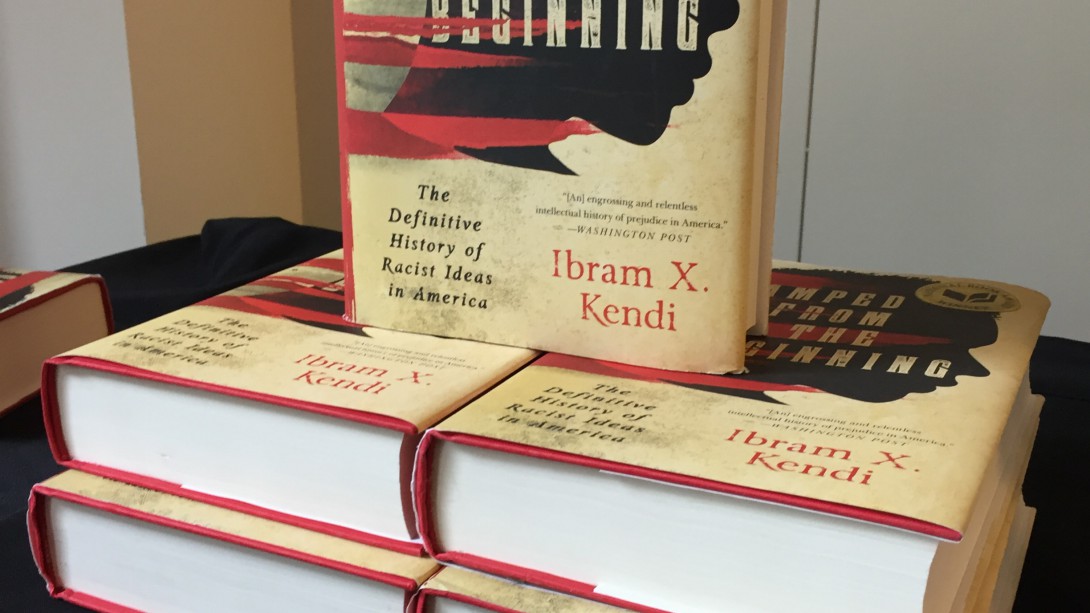
Ibram X. Kendi is a New York best-selling author and National Book Award-winning historian. He came to LSC-Kingwood on March 9 to the Student Conference Center (SCC) to talk about his book, Stamped from the Beginning: The Definitive History of Racist Ideas in America.
“For students is a great opportunity for, one, to hear a great author, and two, hear about the racist ideas that have been part of our history,” Barr said.
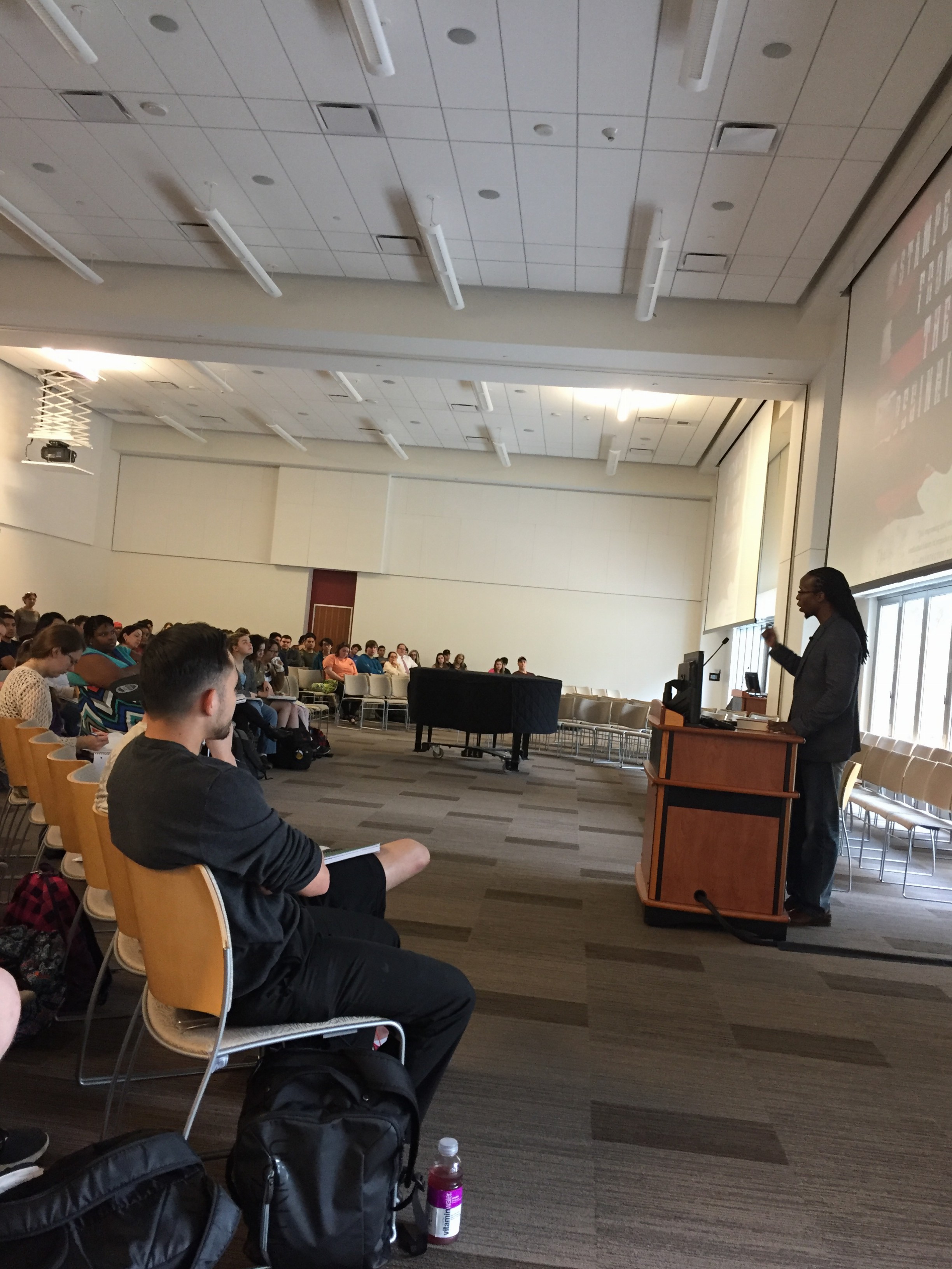
Kendi speaks to the audience. On March 9 in the Student Conference Center.Photo by Michelle Reyes Lecumberry.
Angie Cervantes, an LSC-Kingwood Honors Students, introduced Kendi. She started her introduction by urging students to keep an open mind and saying that sometimes we must have uncomfortable conversations that are terrifying but help us move on as a society.
“Regardless of where you stand politically or socially, or where you stand on issues regarding race, we can all probably agree on the importance of dialogue,” Cervantes said.
Kendi tackles the notion that slavery and racist ideas were born and not cultivated in ignorance but rather cultivated by intelligence.
He defines intelligence by not just someone who knows a great deal, but on a person’s desire to learn and understand. Coincidentally, the ones with the desire to know are the most open minded and also possess the most ability to critique and reflect on their own ideas.
He said that he had yet to come across someone who is willing to admit that their ideas are racist.
Ibram continues to explain further, “no matter what they say, they say, ‘I am not a racist.’” What is interesting about that is that if you ask someone what a racist idea is, they don’t know how to define it.
Because of this lack of a definition, it allows people to claim that their ideas are not racist–
from slaveholders or people who mass incarcerate groups of people of color today by the millions.
Kendi defines racist ideas as “Any idea that suggests a racial group is superior or inferior
to another racial group in any way” and “Anti-racist ideas suggest that racial groups are equal.”
“In our society, we don’t say black people are inferior, but what people say is what is wrong with them. People don’t recognize that to say something is wrong from [with] a particular group is to say that something is inferior about them. ” Kendi said.
He uses this definition to search among the nation’s history and to chronicle its racist ideas, but more specifically to chronicle the impact of these ideas in the course of American history.
What racist ideas do is normalizes racial inequality.
Bigotry against any group causes us as a society to blame the people as opposed to questioning our own policies. Because we have been led to believe that there is something wrong with the people, we think that there is an actual hierarchy between racial groups.
This was done rather strategically. Kendi entered into his text assuming that people had come to racist conclusions because they were ignorant or that they were hateful. Then he realized in his research that that was not largely true.

Ibram X. Kendi’s book Stamped from the beginning. Photo by Michelle Lecumberry.
That idea inspired Kendi not only to write a book about racist ideas but to write a book about racist ideas showing how and why these ideas were developed and redeveloped, created and recreated over the course of American history.
He wants to explain the historic circumstances that allowed these ideas to emerge, and to figure out the motives that explain why an individual creates racist ideas.
“You cannot generalize a group of people based on the actions of one person,” said Kendi.